
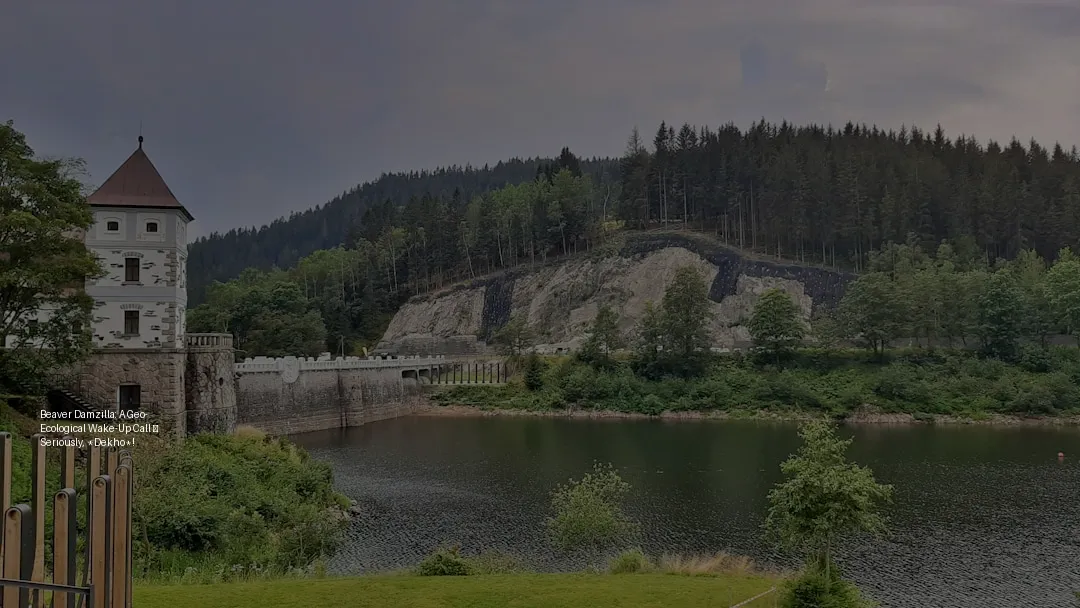
The Dam Breaks: More Than Just a Cute Story
Okay, so a beaver built a bada dam. Like, really bada. Visible from space bada. The Times of India article highlights this behemoth in western Canada, spanning 8 square kilometers and holding back a lake of 10 square kilometers. But let’s be clear: this isn’t just about industrious rodents. This is about a planet undergoing rapid ecological transformation, and we, the humans, are the architects – whether we like it or not.
Climate Change & Beaver Renaissance: A Dangerous Liaison
What’s driving this? Climate change, obviously. Warmer temperatures are extending growing seasons, allowing beavers to expand their range and build bigger, more complex dams. Historically, beaver populations were decimated by trapping and habitat loss. Now, with reduced pressure and a changing climate, they’re staging a comeback – a powerful comeback. This isn’t a natural recovery; it’s an accelerated response to a destabilized environment. Think of it as nature’s frantic attempt to re-engineer the landscape in the face of human-induced chaos. Bahut serious, boss.
Geopolitical Implications: Water Wars & Resource Control
Here’s where it gets interesting, and potentially problematic. These massive dams significantly alter water flow, impacting downstream ecosystems and, crucially, human infrastructure. Imagine the implications for agriculture, hydroelectric power, and even urban water supplies. Suddenly, beavers aren’t just cute; they’re potential adversaries in a resource competition.
Who controls the water? Indigenous communities, who have traditionally relied on these rivers, are already facing disruptions. Resource extraction companies, eyeing the potential for hydropower, will be lobbying for dam removal or modification. And governments? They’ll be caught in the middle, trying to balance environmental protection with economic interests. This is a recipe for conflict, yaar. We’re talking about potential water wars, albeit on a smaller scale than, say, the Nile or the Mekong. But still…wars.
Ecological Ripple Effects: A New Landscape Order
The ecological consequences are equally profound. These beaver dams create wetlands, which can be beneficial for biodiversity – theoretically. But they also alter habitat for other species, potentially displacing them or disrupting food chains. The increased sedimentation behind the dam can smother downstream ecosystems. And the sheer scale of these structures is unprecedented, meaning we don’t fully understand the long-term consequences. We’re witnessing a large-scale ecological experiment, and we’re not even sure what the control group is anymore.
Intelligence Assessment: Vigilance Required
Assessment: The emergence of these mega-dams represents a significant, and largely unacknowledged, geopolitical and ecological risk. Recommendation: Increased monitoring of beaver populations and dam construction is crucial. We need to develop predictive models to assess the potential impact on water resources and infrastructure. Furthermore, proactive engagement with Indigenous communities and resource stakeholders is essential to mitigate potential conflicts. Bottom line: Don’t underestimate the power of a beaver. Yeh chote mota hain, lekin kaamyab hain. Ignoring this trend is strategically foolish. We need to be prepared for a world where beavers are not just building dams; they’re reshaping the geopolitical landscape. Seriously.