
🎯 Core Theme & Purpose
This episode of “Three Things” by The Indian Express delves into pressing issues affecting India, primarily focusing on the alarming rise in train component theft and the severe impact of Mumbai’s urban tree management failures. The podcast offers a data-driven perspective on these issues, aiming to inform citizens about systemic problems and their consequences. Listeners concerned with public infrastructure, urban planning, and governance accountability in India will find this episode particularly insightful.
📋 Detailed Content Breakdown
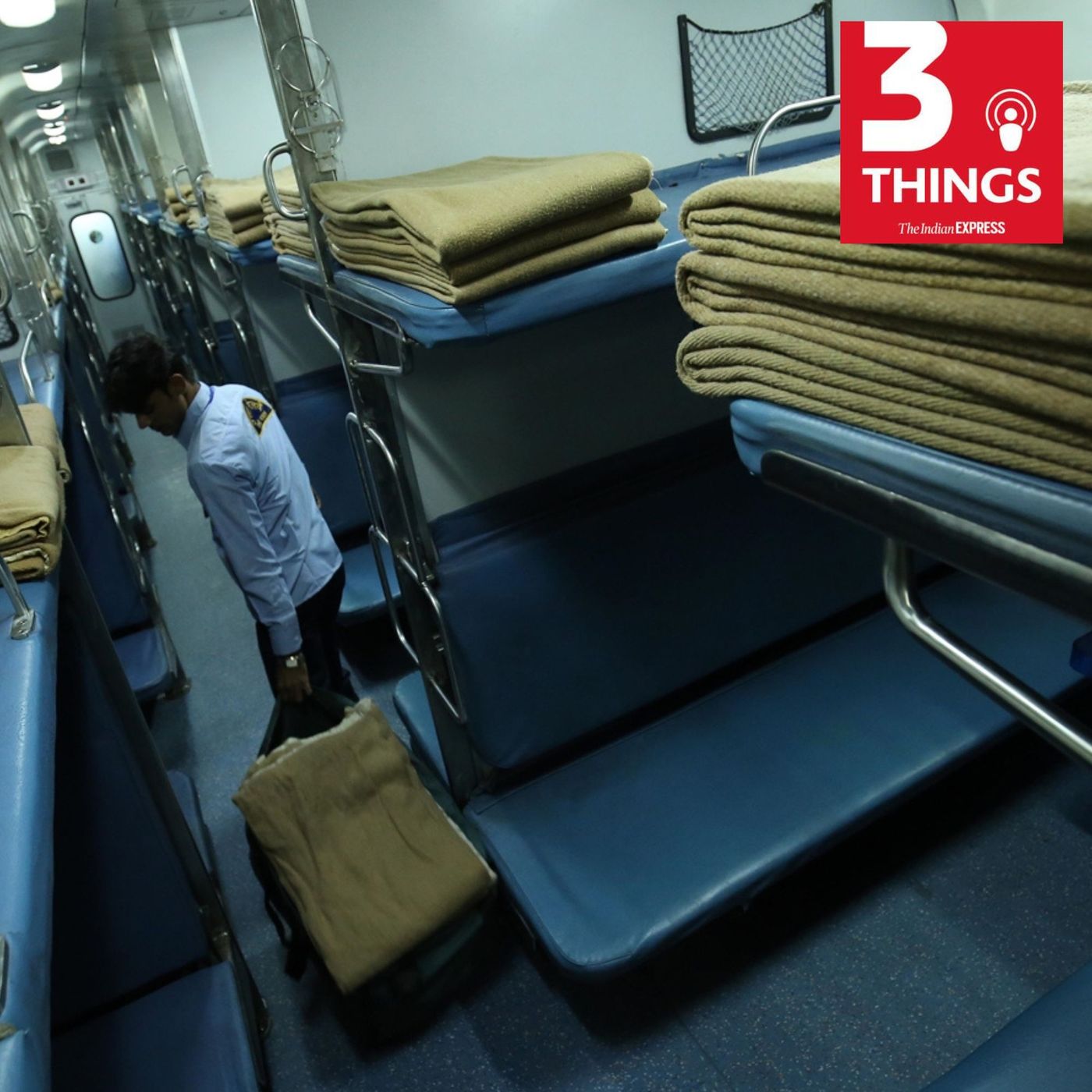
• The Pervasive Problem of Train Linen Theft: An investigation reveals that approximately one in every thousand passengers on Indian Railways walks away with at least one bedroll item. This theft, occurring over four years (2022-2025), resulted in the loss of over 1.27 crore bedroll items. The financial burden of this theft is significant, estimated to be around ₹104 crore, which is ultimately borne by the linen attendants who must reimburse the railways from their own salaries.
• Mumbai’s Failing Urban Tree Management: Over 1800 trees collapsed in Mumbai during the monsoon, leading to three deaths and over a dozen injuries. While the BMC cited strong winds, data suggests a deeper issue of inadequate tree management. The city’s reliance on visual inspections and citizen complaints, rather than a systematic approach to identifying and addressing dangerous trees, is a major concern. Furthermore, the practice of concreting tree bases has weakened roots and hindered water absorption, contributing to the problem.
• The Road to Tree Disaster in Mumbai: Experts attribute the frequent tree collapses in Mumbai not solely to extreme weather but significantly to human intervention. The practice of concreting tree bases, a project initiated by the then Deputy Chief Minister Gopinath Munde in 2002, has been identified as a primary cause. This widespread concreting prevents root growth and water percolation, weakening the trees. The lack of a proper tree authority with scientific expertise and proactive maintenance measures exacerbates the risk.
• Linen Attendant’s Financial Burden: The theft of bedroll items from Indian Railways, costing ₹104 crore over four years, disproportionately affects linen attendants. These employees, often earning modest salaries, are forced to pay for the stolen items out of their own pockets. This highlights a systemic issue where the cost of pilferage is passed onto the lowest-rung employees, creating a difficult financial situation for them.
• The Challenge of Tree Protection in Indian Cities: The episode points to a systemic failure in urban tree management across Indian cities. Unlike cities like Hyderabad or Chandigarh, which have dedicated arboretums and horticultural experts for tree health assessments, Mumbai lacks such proactive measures. The reliance on reactive methods like removing dead branches and the absence of a robust system for monitoring tree health and implementing preventative measures contribute to the recurring incidents of tree falls.
💡 Key Insights & Memorable Moments
- Counterintuitive Revelation: The primary driver behind Mumbai’s tree collapses is not just the monsoon’s ferocity but rather extensive road concreting that starves tree roots of water and nutrients, effectively “killing” them from the ground up.
- Expert Opinion: “The cost of this theft is around ₹104 crore, which is ultimately borne by the linen attendants who must reimburse the railways from their own salaries.” (Dheeraj Mishra, Indian Express)
- Data Point: Over 1.27 crore bedroll items were lost from Indian Railways between 2022 and 2025, with an estimated financial loss of ₹104 crore due to passenger theft.
- Systemic Failure Highlighted: The case of Mumbai’s trees underscores a broader issue of reactive rather than proactive urban planning and infrastructure management in India, where expert advice and previous warnings are often overlooked.
- Quote: “The concreting of tree bases has weakened roots and hindered water absorption, contributing to the problem.” (Arun Sharma, Indian Express)
🎯 Way Forward
- Implement Proactive Tree Management Systems: Mumbai and other Indian cities must move beyond reactive measures. Establishing dedicated tree authorities with arborists and horticultural experts to conduct regular health assessments, identify at-risk trees, and implement timely pruning and root-care strategies is crucial. This will mitigate the danger posed by falling trees.
- Reform Railway Theft Reimbursement Policies: Indian Railways should revise its policy of making linen attendants financially liable for stolen bedroll items. Implementing more stringent security measures, better tracking of inventory, and exploring alternative methods for deterring theft are necessary to alleviate the burden on low-wage employees.
- Integrate Environmental Impact Assessments in Urban Projects: Future infrastructure projects, particularly road construction and expansion, must incorporate mandatory and rigorous environmental impact assessments that specifically address the health and preservation of existing trees. Protective measures for tree bases should be a standard requirement, not an afterthought.
- Strengthen Citizen Engagement and Reporting Mechanisms: While citizen complaints are a starting point, they should be part of a larger, systematic approach. Developing user-friendly platforms for reporting tree-related issues, ensuring prompt action on these reports, and educating the public on tree care can foster a more collaborative approach to urban greenery management.
- Enhance Surveillance and Accountability in Railways: The Indian Railways should invest in advanced surveillance systems, potentially including CCTVs in sleeper-class coaches, to deter theft. Furthermore, a transparent system for tracking linen distribution and recovery, coupled with accountability for personnel at various levels, is needed to curb the significant losses incurred annually.