
🎯 Core Theme & Purpose
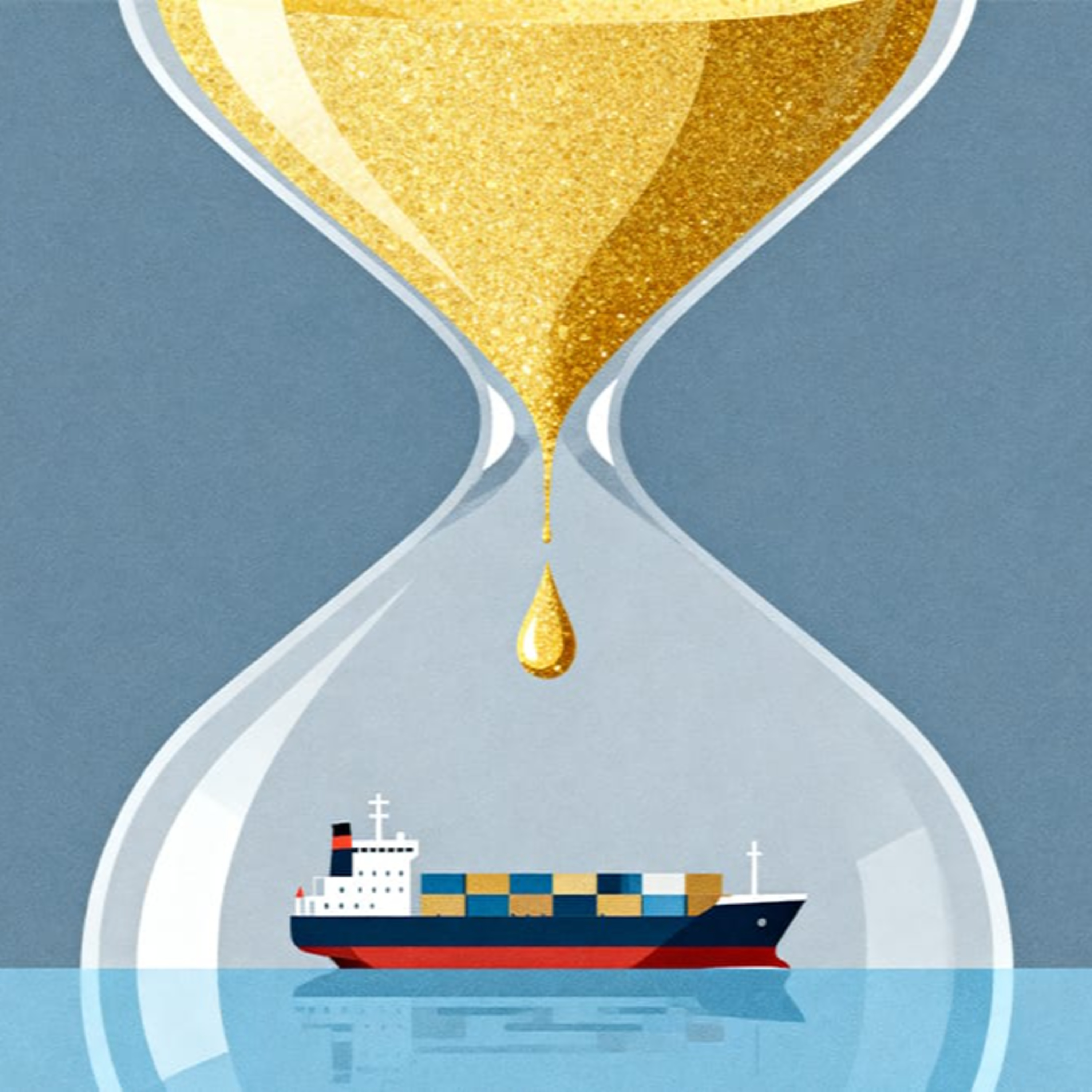
This episode delves into the counterintuitive practice of slow steaming in the maritime industry, explaining why cargo ships deliberately reduce their speed. It reveals the economic and environmental drivers behind this strategy, offering insights relevant to anyone interested in global trade, logistics, and sustainability. The discussion provides a nuanced view on efficiency within a critical sector of international commerce.
Cleveland Browns 2023-24 Season Summary
- The Paradox of Slow Steaming: Cargo ships, responsible for 80% of international trade, often sail slowly not due to perceived illusion but as a strategic choice. This deliberate reduction in speed is driven by significant cost savings and environmental benefits, challenging the notion that speed always equals better business.
- The Financial Catalyst of 2008: The oil price surge in 2008, reaching $147 per barrel, made fuel costs a monumental expense for shipping companies. This economic shock forced the industry to seek drastic cost-saving measures, leading to the widespread adoption of slower sailing speeds.
- Fuel Efficiency Gains: Reducing a ship’s speed by even a modest 10% can lead to a 20% reduction in fuel consumption. This is because the energy required to move a ship increases significantly with speed, making even slight decelerations highly impactful on operational costs over long distances.
- The Limits of Ship Size: While larger ships can carry more cargo, growth is constrained by port infrastructure, canal limitations, and the cost of expanding such facilities. Therefore, optimizing speed, rather than solely relying on increased vessel size, has become a more practical approach to efficiency.
- Environmental Regulations and Incentives: International regulations, such as the IMO’s climate rules, are penalizing high CO2 emissions. Slow steaming directly addresses this by reducing fuel burn, and consequently, emissions. It also significantly lowers underwater noise pollution, benefiting marine ecosystems.
- Challenges and Geopolitical Realities: Despite its benefits, slow steaming faces challenges. Running engines at lower loads can cause technical issues, and the split incentive problem between ship owners and charterers complicates investment in efficiency upgrades. Furthermore, geopolitical tensions and the need to avoid certain routes can force ships to speed up, negating the benefits of slow steaming.
💡 Key Insights & Memorable Moments
- The primary reason for slow steaming is not an illusion but a calculated economic strategy, primarily driven by the soaring fuel costs post-2008.
- A 10% reduction in ship speed can result in a 20% decrease in fuel consumption, highlighting the exponential relationship between speed and energy expenditure.
- “Slow steaming is one of the easiest ways for the industry to cut fuel consumption and emissions without any upgrades.” This quote underscores the low-barrier nature of the strategy.
- The split incentive problem between ship owners and charterers is a significant hurdle, as efficiency upgrades benefit one party while the cost savings from reduced fuel consumption might accrue to the other.
🎯 Way Forward
- Incentivize Owner-Charterer Collaboration: Develop contractual frameworks that equitably share the financial benefits of slow steaming and efficiency upgrades between ship owners and charterers. This matters for driving investment in sustainable maritime practices.
- Invest in Retrofittable Efficiency Technologies: While new ship designs are advanced, focus R&D on technologies that can be readily applied to the existing global fleet, such as improved hull designs and wind-assisted propulsion. This matters for a faster transition to greener shipping.
- Leverage Data Analytics for Route Optimization: Utilize advanced analytics to dynamically adjust speeds based on real-time geopolitical risks, weather, and demand, balancing speed requirements with fuel efficiency. This matters for navigating complex global trade routes efficiently and safely.
- Support Continued Research into Alternative Fuels: While slow steaming is effective, the long-term future requires exploration and adoption of alternative fuels like ammonia and hydrogen. This matters for achieving true decarbonization of the shipping sector.
- Standardize and Enforce Emission Reduction Targets: Strengthen and enforce international regulations for CO2 emissions and underwater noise pollution to create a level playing field and further encourage operational efficiencies like slow steaming. This matters for creating a truly sustainable global shipping industry.