
🎯 Core Theme & Purpose
This episode delves into the often-overlooked contributor to Delhi’s severe air pollution: road dust. It highlights how despite common focus on vehicle emissions and industrial pollution, the pervasive issue of dust generated from poor road conditions and vehicular movement significantly impacts air quality. The discussion is crucial for policymakers, environmental researchers, and citizens concerned about urban air pollution and its multifaceted solutions.
📋 Detailed Content Breakdown
• The Overlooked Menace of Road Dust: Road dust is identified as a major, yet often underestimated, source of air pollution in Delhi. While other pollution sources are frequently discussed, the scientific and health impacts of road dust, particularly PM10 and PM2.5, are not widely understood or prioritized by the public. This dust contributes significantly to the poor air quality experienced annually.
• Quantifying Road Dust’s Contribution: A study by IIT Kanpur in 2016 is cited, revealing that road dust is the single largest contributor to Delhi’s air pollution. It accounts for approximately 56% of PM10 and 38% of PM2.5 emissions. The sheer volume of dust generated from just one kilometer of Delhi’s roads (around 148 kg) underscores the magnitude of the problem.
• The Role of Poor Road Infrastructure: Delhi’s geographical location in a bowl-shaped region already hinders natural dispersion of pollutants. This is exacerbated by a heavy vehicular load and, critically, the poor condition of roads, characterized by potholes and frequent digging for infrastructure projects. The friction between tires and degraded road surfaces generates significant amounts of dust.
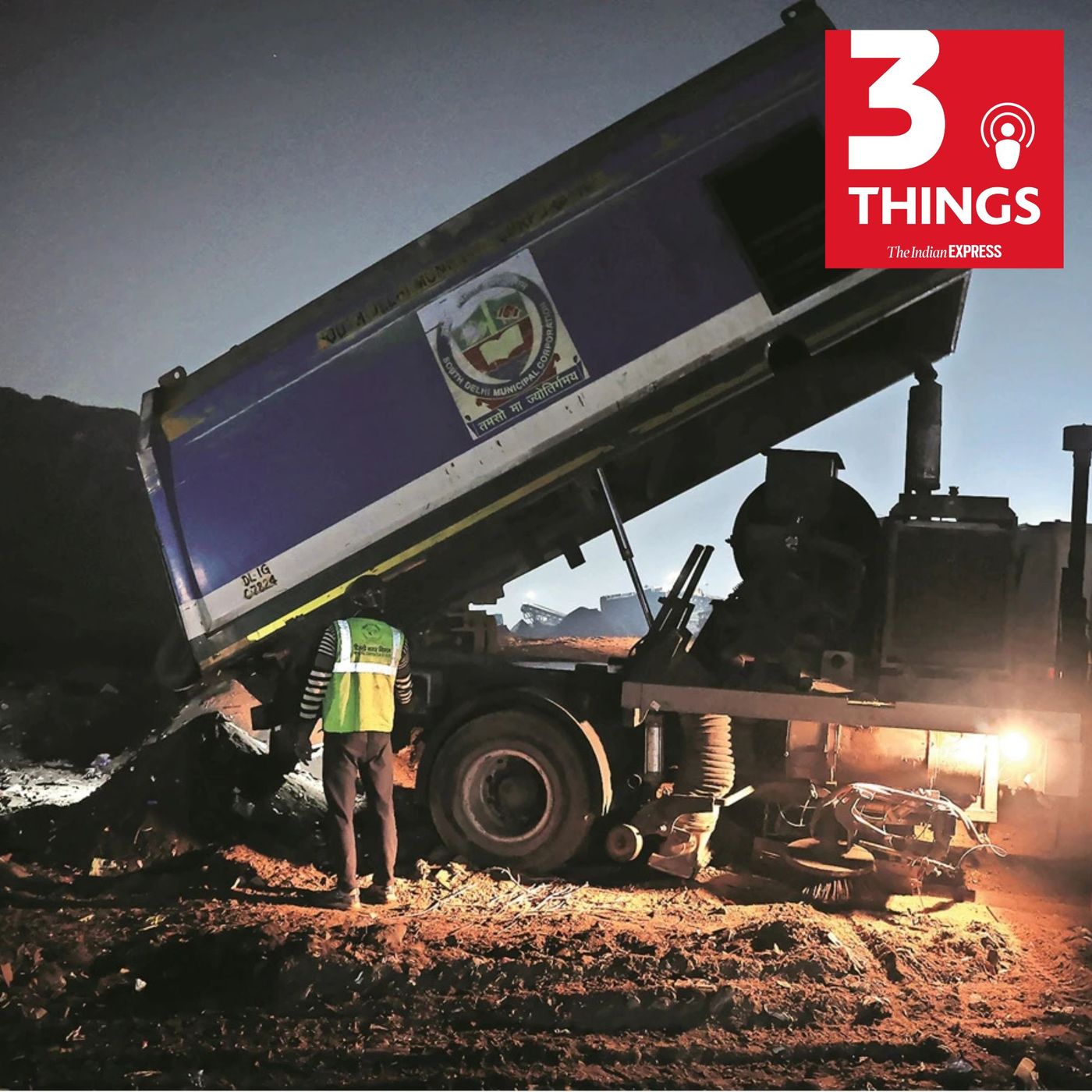
• Mechanical Road Sweepers (MRS) as a Solution: Mechanical road sweepers are presented as a key weapon against road dust pollution. These vehicles employ rotating brushes and vacuum systems, often with water sprinkling, to collect dust and prevent it from becoming airborne. While effective, the current deployment and operational capacity of MRS in Delhi are severely insufficient.
• Insufficient Deployment and Operational Challenges: Despite being a crucial solution, Delhi has a significant deficit in the number of MRS. While the target is 505 machines, the actual number available is far less, leading to low coverage. Furthermore, the operational model for MRS involves multiple personnel (driver, supervisor, sanitation worker) per machine, and challenges like road conditions, cow dung, and manual cleanup tasks limit their efficiency.
• The Year-Round Nature of the Problem: The episode emphasizes that road dust pollution is not just a winter phenomenon. While pollution levels spike and attract attention during colder months, the underlying problem persists year-round. The lack of consistent action and focus on dust control outside the peak season contributes to the ongoing air quality crisis.
💡 Key Insights & Memorable Moments
- Counterintuitive Revelation: The most surprising revelation is that road dust, not vehicular emissions directly, is identified as the largest single source of Delhi’s PM pollution.
- Expert Opinion: “Road dust is a major contributor to air pollution, and this is backed by a lot of scientific studies.” - Sofia Mathew, highlighting the scientific consensus.
- Data Point: The statistic that 1 km of Delhi’s road can generate around 148 kg of dust underscores the sheer scale of the issue.
- Analogy: The analogy of sweeping only one corner of a room while claiming to clean the entire house effectively illustrates the inadequacy of current road dust management strategies.
- Memorable Moment: The description of the intensive manual labor and safety risks faced by sanitation workers and drivers operating road sweepers, despite the machines’ “mechanical” designation, paints a stark picture of the ground reality.
🎯 Way Forward
- Increase Mechanical Road Sweeper Fleet: Significantly scale up the number of MRS across Delhi, focusing not just on major carriageways but also on internal roads and areas with high dust generation. This matters for comprehensive coverage and reducing overall dust emissions.
- Improve Road Quality and Maintenance: Implement a consistent and robust program for road repair, maintenance, and construction standards to minimize the generation of dust from road surfaces. This matters for addressing the root cause of dust pollution.
- Develop a Comprehensive Dust Management Strategy: Create a unified, year-round strategy for road dust control that includes regular mechanical sweeping, road washing, and dust suppressants, rather than concentrating efforts only during winter. This matters for sustained air quality improvement.
- Enhance Worker Safety and Efficiency: Improve the operational model for MRS by providing better protective gear for workers and streamlining tasks to enhance efficiency and reduce worker fatigue. This matters for worker well-being and operational effectiveness.
- Leverage Technology for Real-time Monitoring and Public Engagement: Develop and deploy user-friendly mobile applications for real-time monitoring of MRS activity and dust levels, empowering citizens with information and fostering transparency. This matters for accountability and public awareness.