
🎯 Core Theme & Purpose
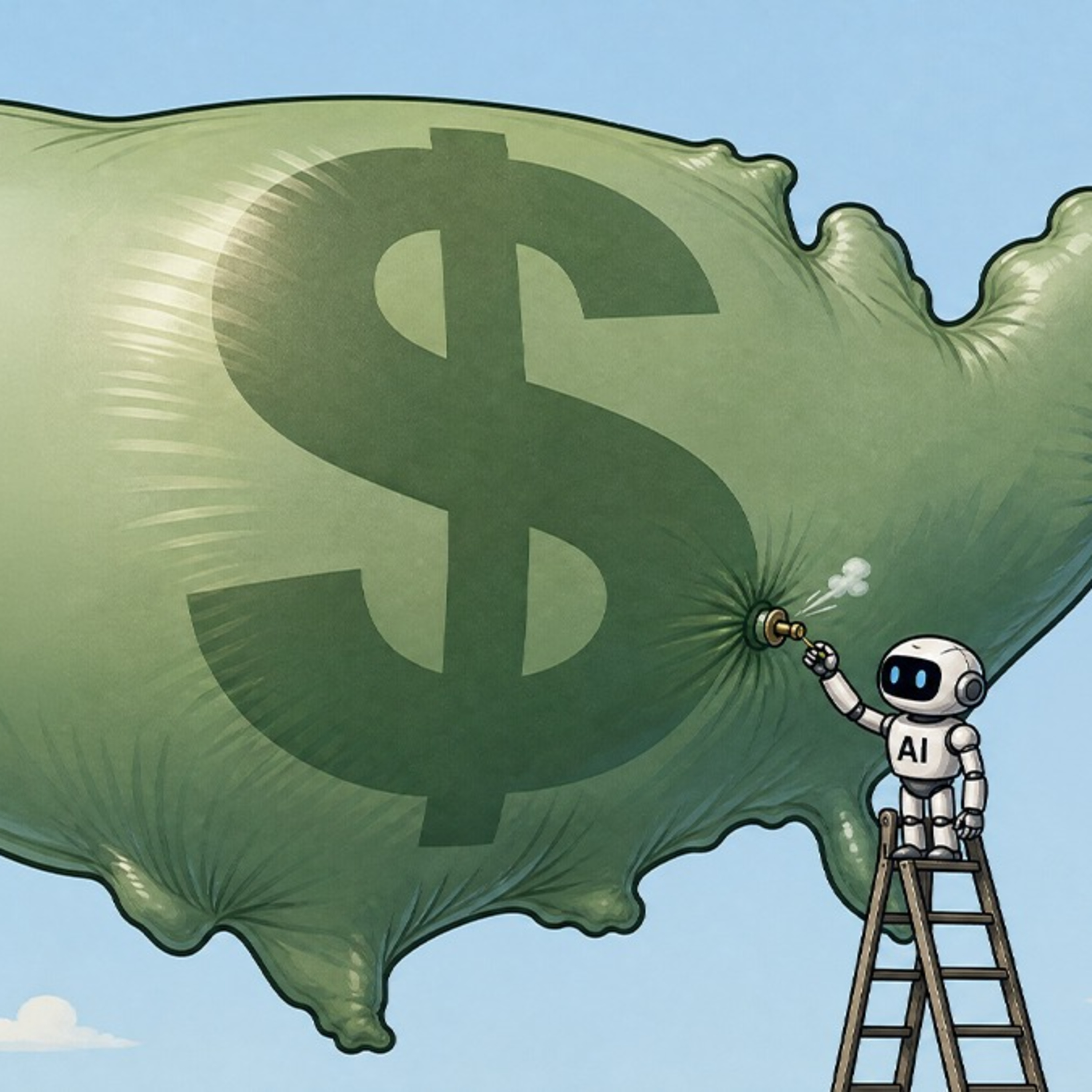
This episode delves into the pressing issue of the US national debt and explores the potential of an AI-driven productivity boom to alleviate this fiscal challenge. It dissects the mechanics of national debt, presents alarming statistics on its growth, and critically examines whether AI can offer a genuine solution beyond traditional fiscal policies. This analysis would benefit economists, policymakers, financial analysts, and anyone concerned about the long-term economic stability of the United States.
📋 Detailed Content Breakdown
• Understanding National Debt: The segment begins by explaining how governments incur debt when spending exceeds revenue. This debt is financed by issuing bonds, with promises of interest payments and principal repayment. The US national debt has ballooned significantly, recently surpassing $39 trillion.
• Escalating US Debt Trajectory: The episode highlights the exponential growth of US debt, noting it took nearly 200 years to accumulate the first trillion dollars. The debt has doubled rapidly in recent decades, with the COVID-19 pandemic alone adding over $4 trillion in a single year. The US now spends over $1 trillion annually on interest payments alone, exceeding its spending on Medicare or national defense.
• AI as a Potential Debt Reducer: A key argument presented is that an AI-driven productivity surge could allow the economy to grow its way out of debt. Increased productivity by AI could lead to higher company profits and wages, automatically increasing tax revenues for the government without raising tax rates. This mirrors the economic boom seen during the dot-com era, which significantly reduced the US budget deficit.
• Challenges and Counterarguments to AI’s Impact: The analysis acknowledges that AI’s benefits might be offset by new costs. Increased longevity due to AI could raise social security and Medicare expenses. If AI leads to job displacement, unemployment benefits might increase. Furthermore, AI-driven profits may concentrate among a few companies, shifting the tax base from labor to capital, which is taxed less heavily.
• Policy Implications and AI’s Role: The episode underscores that AI’s effectiveness in tackling the debt crisis is not solely dependent on technological advancements but also on policy responses. Governments will need to decide whether to increase taxes on corporations or cut back on income support for workers displaced by AI. These tough fiscal decisions will ultimately determine how much AI can contribute to reducing the national debt.
💡 Key Insights & Memorable Moments
• Counterintuitive Tax Revenue Shift: A surprising revelation is that AI’s potential to shift income from labor (wages, taxed heavily) to corporate profits and capital gains (taxed less heavily) could lead to lower overall tax revenue for the government, even with increased economic productivity.
• “Growing out of Debt” is Not Simple: The idea that increased productivity automatically solves debt issues is challenged. The episode points out that while AI can boost the economy, it also introduces new spending pressures and potential shifts in tax burdens that could counteract the benefits.
• Policy is as Crucial as Technology: The argument is made that AI’s impact on the national debt will largely depend on how governments respond with fiscal policies regarding taxation and social support systems.
• Statistic Highlight: The US national debt surpassing $39 trillion is a stark figure, compounded by the fact that interest payments alone now exceed $1 trillion annually, surpassing spending on major social programs and defense.
🎯 Way Forward
-
Invest in AI-Driven Productivity Initiatives: Governments and businesses should actively invest in research, development, and deployment of AI technologies that demonstrably increase output per worker and per unit of capital. Why it matters: This is the foundational step for unlocking the potential economic growth that could help manage debt.
-
Reform Tax Structures for the AI Era: Policymakers must proactively analyze and adjust tax codes to ensure that increased corporate profits and capital gains driven by AI contribute a fair share to government revenue, mitigating potential revenue shortfalls from a shifted tax base. Why it matters: This addresses the risk of AI exacerbating wealth inequality and reducing government income.
-
Develop Robust Social Safety Nets for AI-Displaced Workers: Governments need to plan for potential job displacement by investing in re-skilling programs, enhanced unemployment benefits, and possibly exploring new forms of income support to cushion the impact on individuals and maintain consumer spending. Why it matters: This mitigates social disruption and ensures that economic gains are more broadly shared.
-
Foster International Cooperation on AI Governance and Taxation: Given AI’s global impact, international collaboration on regulating its development and ensuring fair taxation of AI-generated profits will be crucial to prevent a “race to the bottom” in corporate tax rates. Why it matters: This prevents tax avoidance and ensures a more equitable global economic landscape.
-
Prioritize Fiscal Discipline Alongside AI Adoption: While AI offers potential solutions, it’s not a panacea. Continued focus on responsible government spending, deficit reduction, and efficient use of public funds will remain essential alongside technological advancements. Why it matters: AI can be a powerful tool, but fundamental fiscal responsibility is still paramount for long-term debt sustainability.