
🎯 Core Theme & Purpose
The podcast comprehensively covers global news and significant events, primarily focusing on the humanitarian crisis in Venezuela following powerful earthquakes, anti-immigration protests in South Africa, a high-profile financial fraud case in the US involving a Chinese tycoon, and a critical NASA mission to save a falling space telescope. It aims to inform listeners about pressing international issues, their underlying causes, and immediate impacts, making it essential listening for those seeking a detailed overview of current affairs.
📋 Detailed Content Breakdown
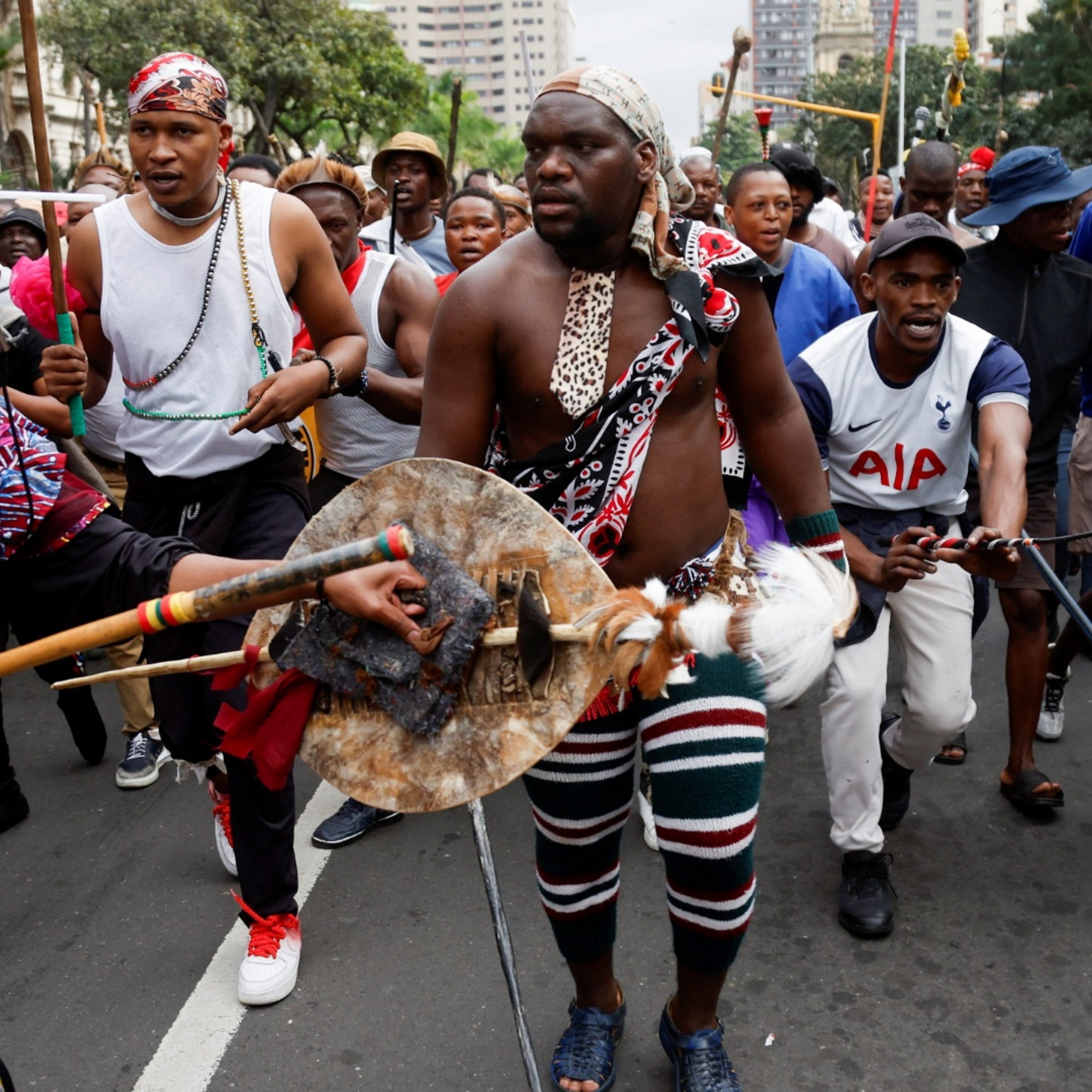
• Anti-Immigration Protests in South Africa: Thousands marched across South Africa, calling for undocumented migrants to leave the country. These demonstrations align with an unofficial deadline set by anti-immigration groups, leading to increased tensions and security deployments. Reports from Durban indicate focused police presence in potential hotspots, while Johannesburg saw crowds diverting from planned routes. • Violence was reported with protestors throwing stones at residential buildings and businesses, targeting areas believed to house foreign nationals. • The sentiment stems from perceptions that migrants exacerbate issues like high unemployment, long hospital wait times, and crime.
• Venezuela Earthquake Aftermath and Government Response: Powerful twin earthquakes caused widespread devastation in Venezuela, described as the most brutal natural catastrophe in the country’s history. The official death toll exceeds 1,700, with many more still missing, but residents accuse the government of inadequate response and abandonment. International help from 30 countries has arrived, yet anger against the government is growing due to perceived inaction. • Rescue efforts are largely being carried out by local communities with makeshift tools, as formal rescue operations are criticized as absent or insufficient. • Reports highlight the desperate search for missing loved ones amidst the rubble and in overwhelmed hospitals, with families facing a lack of information and support.
• Chinese Tycoon Sentenced for Financial Fraud: Guo Wengui, a Chinese tycoon, was sentenced to 30 years in a US prison after being convicted of financial fraud, racketeering, and money laundering. He amassed his wealth in China before moving to the US a decade ago, where he lived a lavish lifestyle and claimed to be a democracy activist against China’s communist government. He defrauded thousands of investors, often from the Chinese-American community, promising high returns while diverting funds to support his extravagant life. • His past includes prison time and he leveraged connections made during his rise in China’s real estate market in the 1990s. • Chinese authorities considered him a fraudulent businessman and sought his extradition, leading him to reinvent himself as a democracy activist to evade return.
• NASA Mission to Save Swift Space Telescope: NASA is preparing to launch a robotic spacecraft to save its aging Swift Observatory telescope from falling back to Earth. The telescope, currently in a low Earth orbit at approximately 360 kilometers, is gradually losing altitude due to atmospheric drag and is projected to re-enter and burn up later this year if no action is taken. The mission aims to push Swift into a higher, more stable orbit to extend its scientific life by another 10 years or more. • A company from Arizona, Catalyst Space Technologies, has been contracted to build a new satellite equipped with three robotic arms to grapple Swift. • While the mission’s goal is to extend operations, Swift will eventually re-enter Earth’s atmosphere; the effort is focused on delaying this inevitable event to maximize scientific output.
• UK Increases Defense Spending: The British Prime Minister announced billions of dollars in extra defense spending over the next few years to upgrade the country’s military. By 2029, the UK’s annual defense budget is expected to exceed $100 billion, with funds allocated for new technology like drones, autonomous weapons, and a “hybrid naval force” utilizing uncrewed vessels. This move is driven by the belief that preparing for war is the best way to deter it, amidst a global landscape of increasing aggression. • The decision reflects a growing concern among European governments about the need for better defense preparedness, especially in the wake of Russia’s full-scale invasion of Ukraine. • Critics argue that the increased funding, while necessary, is insufficient given decades of underinvestment in the armed forces, and that the government’s current plans fall short of expert recommendations.
• Men’s World Cup Shocks: The podcast concludes with surprising results from the Men’s Football World Cup, particularly the early exit of two European powerhouses: the Netherlands and Germany. The Netherlands lost to Morocco on penalties, but the biggest upset came from Paraguay beating Germany, also on penalties, to advance to the last 16. This marks the third consecutive World Cup where Germany has failed to progress beyond the last 16 stage. • The victory is seen as historic for Paraguay, a small South American nation, challenging expectations and inspiring dreams among its fans. • German fans expressed deep disappointment and acknowledged that their team is no longer among the top European football nations, despite some feeling they were unlucky.
💡 Key Insights & Memorable Moments
• Community Resilience Amidst Government Absence: In Venezuela, one striking revelation is the stark contrast between official relief efforts and the reality on the ground. A mother searching for her two daughters lamented, “They are all I have. I just want to find them at any cost.” She highlighted, “There were no machines or rescuers sent. It’s like you’ve been left on your own to search for your loved ones.” This underscores the profound sense of abandonment felt by citizens, forced to rely on their own strength and basic tools for rescue.
• Power of Soft Power and Symbolic Gestures: Tristan Redman discusses how the US built a “soft power empire” with the aid of “tiny metal objects,” suggesting an intriguing link between seemingly insignificant items and vast global influence. Later, a protest leader in South Africa clarifies the carrying of traditional sticks during demonstrations: “that stick does not mean that they will be using them to attack foreigners… it is just a symbol of who they are.” This highlights the importance of symbolism and cultural identity in public display, even when misinterpreted by outsiders.
• Statistical Blind Spot in Migration Debate: Regarding the anti-immigration protests in South Africa, a correspondent points out a critical data gap: “a lot of the sentiment is anecdotal from people who say they live within communities where they see crime happening, but the police themselves… don’t release it by nationality.” This reveals a lack of granular official statistics on crime rates specifically broken down by nationality, which makes it challenging to address the factual basis of public perceptions and instead allows for narratives based on anecdotal evidence to dominate.
• The Paradox of Peace: The British Prime Minister articulates a compelling strategic viewpoint: “the paradox of peace is that when the world is arming and aggression is rising, the best way to avoid war is to prepare for it.” He further states, “the best way to defend is to deter,” emphasizing that a nation needs “the strength to make your adversaries think again before they act.” This crystallizes a core argument for increased military spending as a preventative measure, rather than an escalatory one.
🎯 Way Forward
- Enhance Transparency in Crime Statistics: Law enforcement agencies in countries experiencing high immigration-related tensions should consider publishing detailed, nationality-disaggregated crime statistics where appropriate. This matters because it would either validate or refute public perceptions, fostering evidence-based policy discussions and potentially reducing xenophobic sentiment by dispelling misinformation.
- Invest in Robust Disaster Preparedness and Community Empowerment: Governments in disaster-prone regions need to prioritize pre-emptive measures, including training local communities in basic rescue operations and establishing clear, accessible emergency response protocols. This matters because relying solely on official, often delayed, interventions leaves populations vulnerable, as tragically seen in Venezuela where immediate, localized action is critical for survival.
- Promote International Collaboration for Space Infrastructure Maintenance: Space agencies should establish more formalized international partnerships for on-orbit servicing and maintenance of critical space assets like telescopes and satellites. This matters because the Swift Observatory mission highlights the growing need to preserve costly scientific instruments beyond their initial lifespan, requiring shared expertise and resources to overcome technical and financial barriers in an increasingly crowded space environment.
- Strengthen Global Governance on Financial Crime and Extradition Treaties: International bodies and national governments must work to strengthen cross-border cooperation in investigating and prosecuting financial fraud, including robust extradition treaties and shared intelligence. This matters because cases like the Chinese tycoon’s demonstrate how complex financial crimes often transcend national borders, requiring a united front to protect investors and maintain the integrity of global financial systems.
- Develop Comprehensive Strategies for Migrant Integration and Support: Countries facing significant undocumented migrant populations should develop and implement comprehensive strategies that include clear pathways for legal status, accessible social services, and programs for economic integration. This matters because it addresses both the humanitarian concerns for migrants and the socio-economic pressures felt by host communities, transforming a contentious issue into a managed process that benefits all residents while reducing social unrest.